
Licensed, Bonded & Insured: #HIC-0602420
#1 Stainless Steel Chimney Liners & Chimney Service - Book Now!
Efflorescence on Brick and Stone: What the White Powder Means
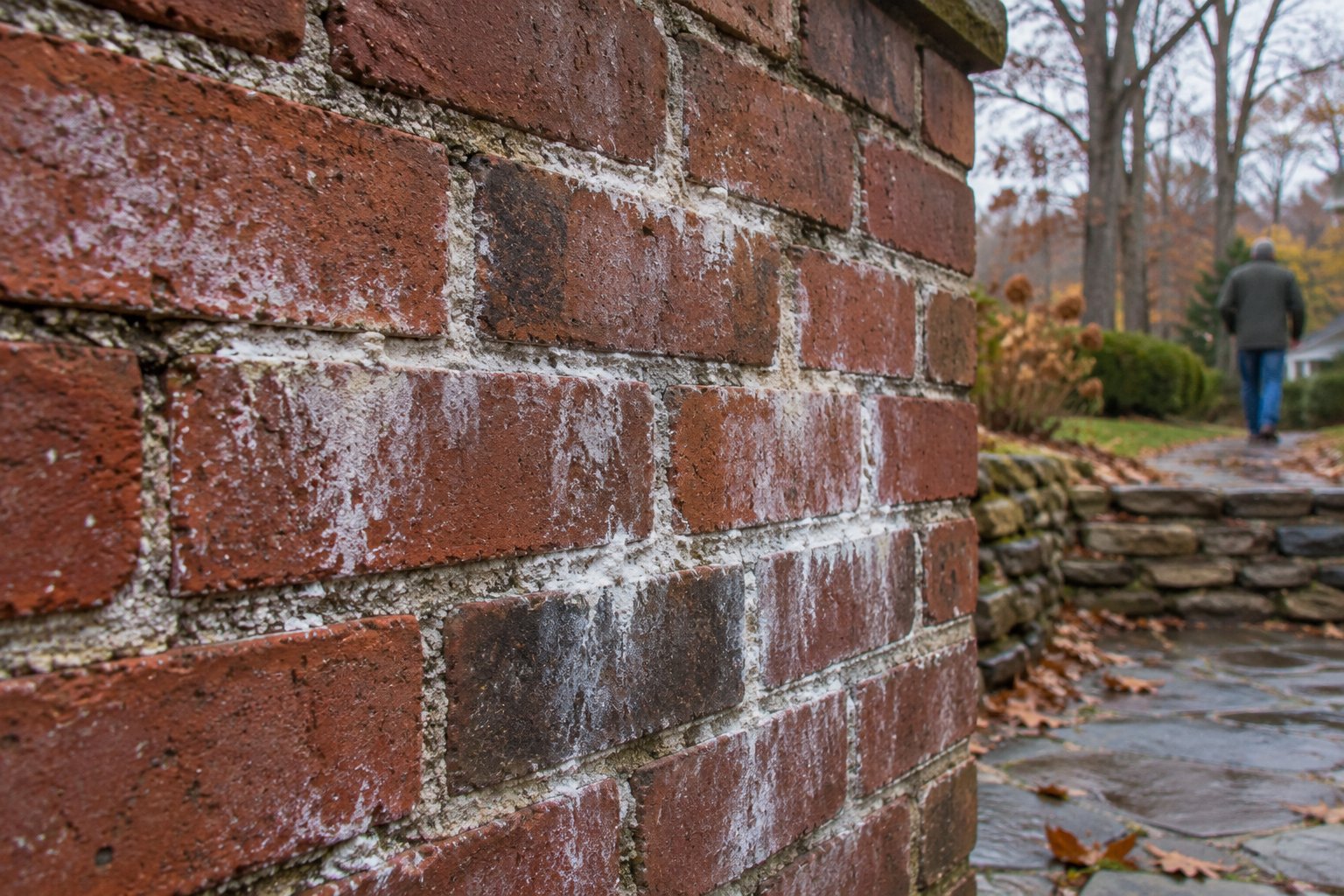
You walk past your brick chimney, front steps or stone wall and notice a chalky white film that was not there last month. It wipes off on your hand like powder, and it seems to show up more as the weather turns cold and damp. That white deposit is called efflorescence, and for Connecticut homeowners it is one of the most common questions about masonry in late fall and winter.
The short version: efflorescence itself is usually cosmetic, but it is a message. It tells you water is moving through your masonry and carrying salts to the surface. This guide explains what it is, why it shows up now, what you can safely do about it, and when it is time to call a mason.
What efflorescence actually is
According to the Brick Industry Association, efflorescence is a white crystalline deposit of water-soluble salts that appears on masonry. It forms when water containing dissolved salts is carried to the surface of the brick, stone or mortar, the water evaporates, and the salts are left behind.
Three things have to be present at the same time: soluble salts somewhere in or touching the masonry, enough water to dissolve them, and a path through the masonry for that salty water to travel to the surface. Take away any one of those and efflorescence will not form. In practice, the one you can control is water.
Many people assume the brick itself is the problem, since the powder appears on the brick face. In fact, the salts more often come from other materials in contact with the brick, such as cement-based mortar, grout or concrete masonry. The mortar between your bricks and the concrete under your steps are common sources.
Why it shows up in winter
Masonry industry guidance explains that efflorescence is more common in winter because evaporation is slower in cold, damp weather, which gives salts more time to migrate to the surface. In summer, moisture evaporates so quickly that smaller amounts of salt are brought to the surface. In spring, moisture that was frozen inside the masonry can thaw and carry dissolved salts out again.
The Brick Industry Association also notes something important about timing. If efflorescence appears on a wall more than a year after it was built, it can generally be attributed to excessive water getting in or poor drainage, and it is often worst in winter or cold periods. New masonry can also show a temporary "new building bloom" that often fades by itself with normal weathering. A white film on a chimney or step that has been there for decades is a different story.
Where the water is coming from
Masonry guidance identifies rain water as the primary source of moisture. It can enter through permeable masonry units, partially filled mortar joints, inadequate flashing and sealing details, and cracks or other openings. On a home in New Haven County, that translates into a few common culprits to check:
- Deteriorated mortar joints on chimneys, walls and steps that let rain in
- A cracked chimney crown or missing cap that sends water down into the chimney structure
- Failed or missing flashing where the chimney meets the roof
- Soil or mulch against the masonry, or poor drainage along a foundation or retaining wall, so ground water can be absorbed and wicked upward
- Water pooling on flat surfaces such as step treads, wall caps and landings
Because most masonry damage is caused by water penetration, finding and fixing the entry point is the real repair. Cleaning the white powder without fixing the water source just means it comes back.
What you can do yourself, and what to skip
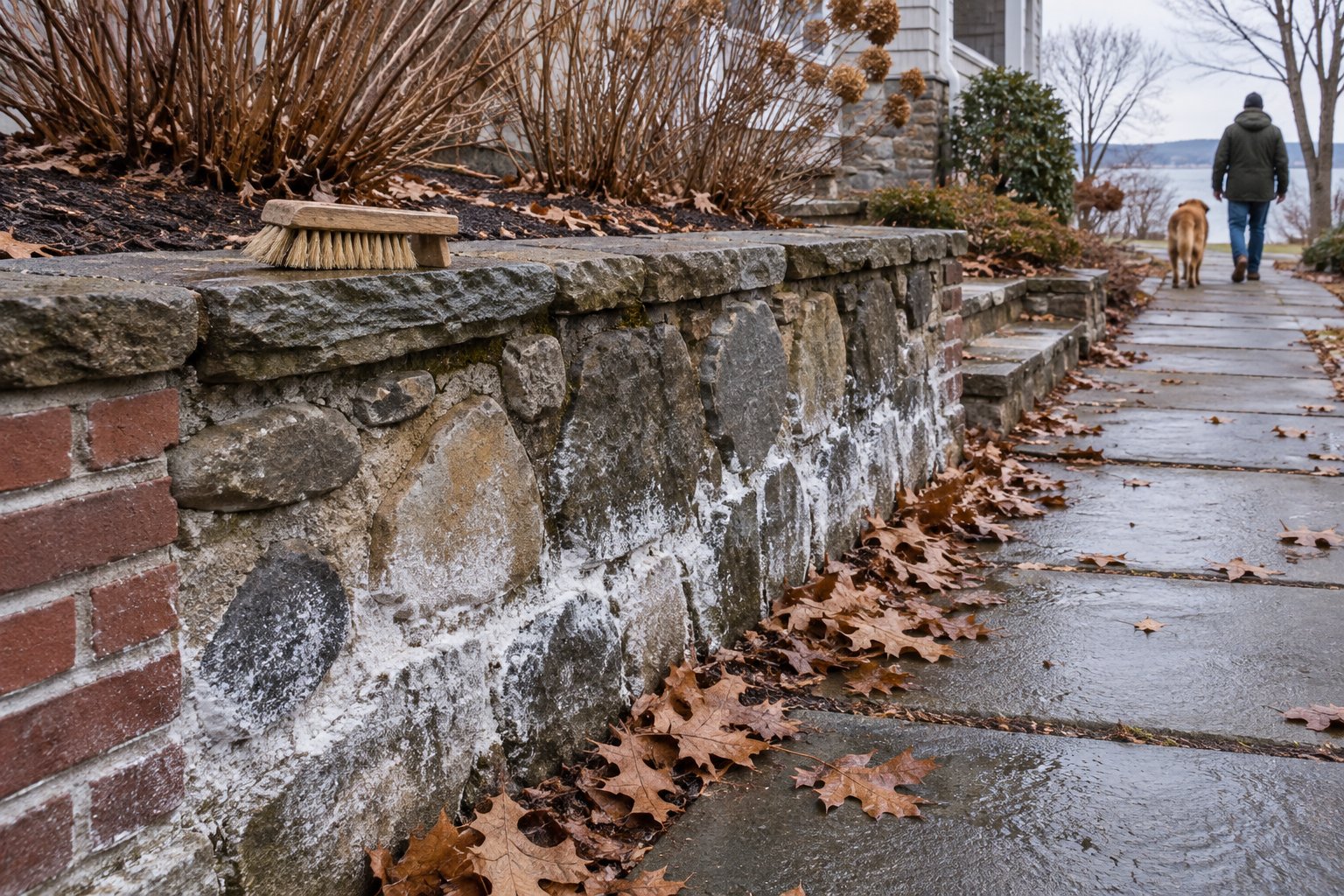
Most efflorescing salts dissolve in water, and many disappear on their own with normal weathering. Industry guidance says most efflorescence can be removed by dry brushing followed by flushing with clean water. A stiff natural-bristle brush and a dry day are a reasonable first step.
A few cautions apply, especially now:
- Avoid water cleaning in freezing temperatures. Historic preservation guidelines list washing masonry with liquids when temperatures are freezing as something not to do. If it is cold, dry-brush now and wait for a milder, dry stretch to rinse.
- Do not reach for acid as a first move. Dilute muriatic acid is described in industry guidance only as a last resort, tested on a small hidden spot first, applied to pre-wetted masonry and flushed thoroughly. Improper acid use can itself leave behind chlorides that cause new efflorescence, and it can damage some stone and colored masonry.
- Do not use a wire brush. Steel filings left behind can rust and stain.
- Do not seal over it. Both the Brick Industry Association and concrete masonry guidance warn that applying a coating to masonry that tends to effloresce, without stopping the cause, can lead to spalling or other degradation. Coatings that block evaporation can trap water and salts behind the surface.
Efflorescence versus real damage
The powder alone is rarely the emergency. What matters is what is happening around it. Salt crystals that grow inside masonry units can create pressure, and the Brick Industry Association notes that crystal growth can cause cracking and distress in some cases. Signs that you are dealing with more than a surface film include:
- Mortar that is crumbling, sandy or missing from joints
- Brick or stone faces that are flaking, peeling or popping off (spalling)
- Efflorescence that returns within weeks of being brushed off
- Damp spots, staining or peeling paint on interior walls near a chimney
- Cracks in the chimney crown, steps or wall cap
Photographing the area now gives you a useful baseline. If the same spot looks worse in spring, that tells you the problem is progressing.
When to call a mason
It is time to bring in a masonry contractor when the white deposits keep coming back, when you see any of the damage signs above, or when you cannot tell where the moisture is entering. A mason can trace the water path, repair or repoint failed joints, repair a cracked crown or cap, and recommend what to do about flashing or drainage. Since repairs generally depend on the temperature, a winter inspection is a good way to get a plan in place for the first workable days of spring.
Frequently Asked Questions
Is efflorescence dangerous or a sign my brick is failing?
By itself, it is usually not harmful to brick masonry. It is a sign that water is moving through the masonry. Whether that matters depends on how much water, how long it has been happening, and whether there is mortar loss or spalling alongside it.
Will it go away on its own?
Often it lightens with weathering, particularly on new masonry. If the source of water is not fixed, it can return, sometimes every winter.
Can I just apply a sealer to stop it?
Sealing is not a substitute for repairing the water entry. Applying a coating over masonry that is actively efflorescing can trap moisture and salts and lead to spalling.
Is the white powder the same on stone as on brick?
The process is the same for brick, stone, mortar and concrete: water carrying soluble salts to the surface. The salts may come from different materials, which is why a mason looks at the whole wall or chimney rather than one spot.
Have a mason take a look
MTM Masonry & Chimney repairs brick, stone and concrete masonry, including chimneys, steps and walls, for homeowners throughout New Haven County and nearby Connecticut counties. If white deposits keep coming back or you are seeing crumbling mortar, contact us and request a quote through our contact page.


All rights reserved | Privacy policy
Web Marketing by 1stbay